Get to know the keynote speakers who will inspire, challenge, and elevate the T21RS 2026 conference.
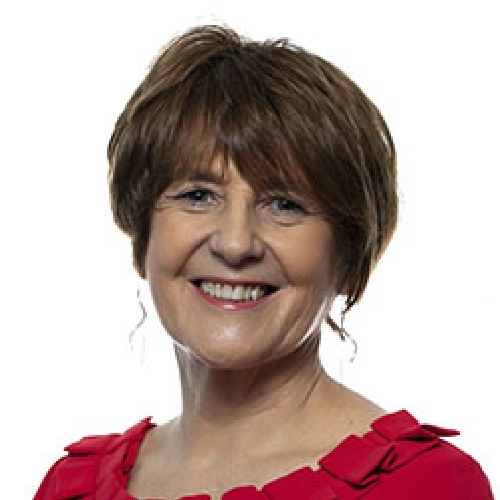
Mary McCarron
Professor Mary McCarron, PhD RNID RGN BNS FAAN FTCD, is an internationally recognised leader in ageing, dementia and intellectual disability.
She is Professor of Ageing and Intellectual Disability and Director of the Trinity Centre for Ageing and the Life Course in Intellectual Disability (TCAID) at Trinity College Dublin, and Executive Director of Ireland’s National Intellectual Disability Memory Service. She is the founder and Principal Investigator of the Intellectual Disability Supplement to the Irish Longitudinal Study on Ageing (IDS-TILDA), Europe’s first longitudinal study of ageing in people with intellectual disability, and has led a 25-year cohort study on dementia in people with Down syndrome. Her research has shaped clinical pathways, dementia-friendly environments, and national dementia policy in Ireland and internationally. Professor McCarron has secured approximately €20 million in competitive research funding and has published extensively in high-impact journals. She is a Fellow of the American Academy of Nursing and Trinity College Dublin, an Honorary Professor at Queen’s University Belfast, and a Visiting Professor at Duke University. Her work bridges research, clinical innovation, and policy, with a strong commitment to co-production and improving outcomes for people with Down syndrome and dementia.
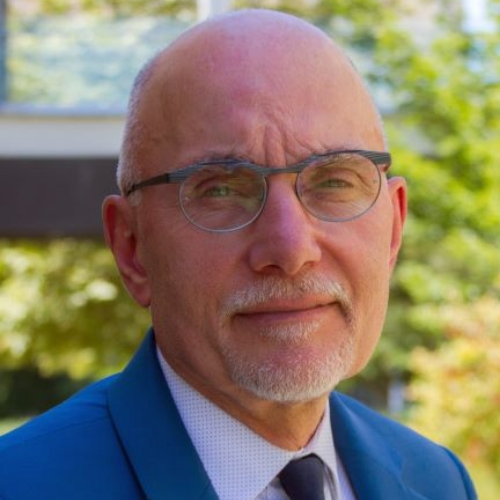
Leonard Abbeduto
Leonard Abbeduto, Ph.D., is a distinguished professor emeritus at the University of California, Davis.
His current research is focused on understanding variation in language outcomes in various conditions associated with intellectual disability, the measurement of treatment effects in clinical trials, and the use of distance technology to deliver behavioral treatment. He has published nearly 300 articles, chapters, reviews, and books. He co-directs the NIH-funded MIND Institute Intellectual and Developmental Disabilities Research Center (IDDRC). He also co-directs the UC Davis Redwood SEED Scholars program – an inclusive college program for individuals with intellectual disabilities. He has received numerous awards, including the Edgar A. Doll Award for Distinguished Research Contribution from Division 33 of the American Psychological Association.
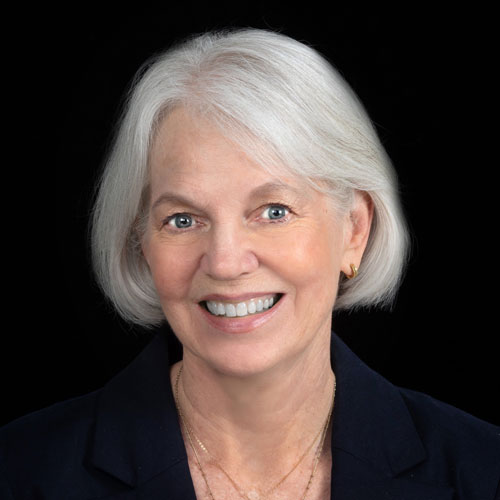
Dr. Sonja Rasmussen
Sonja Rasmussen, MD, MS currently serves as Professor in the Department of Genetic Medicine and the Department of Gynecology and Obstetrics at Johns Hopkins School of Medicine.
She joined Johns Hopkins after 4 years at the University of Florida College of Medicine and College of Public Health and Health Professions where she served as a Professor in the Departments of Pediatrics, Epidemiology, and Obstetrics and Gynecology and as the Director of their Precision Health Program. Before joining University of Florida in 2018, she served for 20 years at the CDC in Atlanta, where she held several scientific leadership roles. She has a longstanding interest in Down syndrome and has conducted many epidemiologic studies of Down syndrome over the years. She recently began work on the NIH-funded INCLUDE (INvestigation of Co-occurring conditions across the Lifespan to Understand Down syndromE) Collaboration for Down Syndrome Progress study. Dr. Rasmussen is an author on >300 peer-reviewed publications.
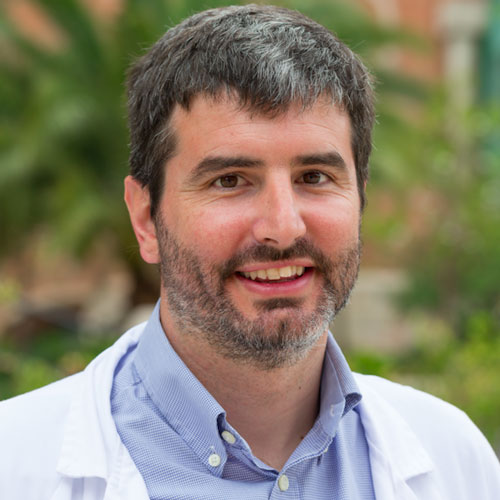
Dr. Juan Fortea
Juan Fortea, MD, PhD, is a behavioral neurologist and Director of the Memory Unit at Hospital de la Santa Creu i Sant Pau in Barcelona. He is also the founding Director of the Alzheimer-Down Unit at the Catalan Down Syndrome Foundation and Hospital Sant Pau.
Dr. Fortea’s research focuses on Alzheimer’s disease biomarkers, genetically determined forms of Alzheimer’s disease, and the clinical and biological characterization of Alzheimer’s disease in people with Down syndrome. He has authored more than 350 scientific articles and has led and participated in numerous national and international studies, including a population-based health plan for adults with Down syndrome and the DABNI study, aimed at defining the natural history of Down syndrome–associated Alzheimer’s disease, improving diagnosis and prognosis, and advancing trial readiness in this population.
A central goal of his work is to translate progress from observational cohorts, longitudinal studies, and biomarker research into therapeutic and prevention trials for people with Down syndrome.